 Image 1 of 1
Price: £80
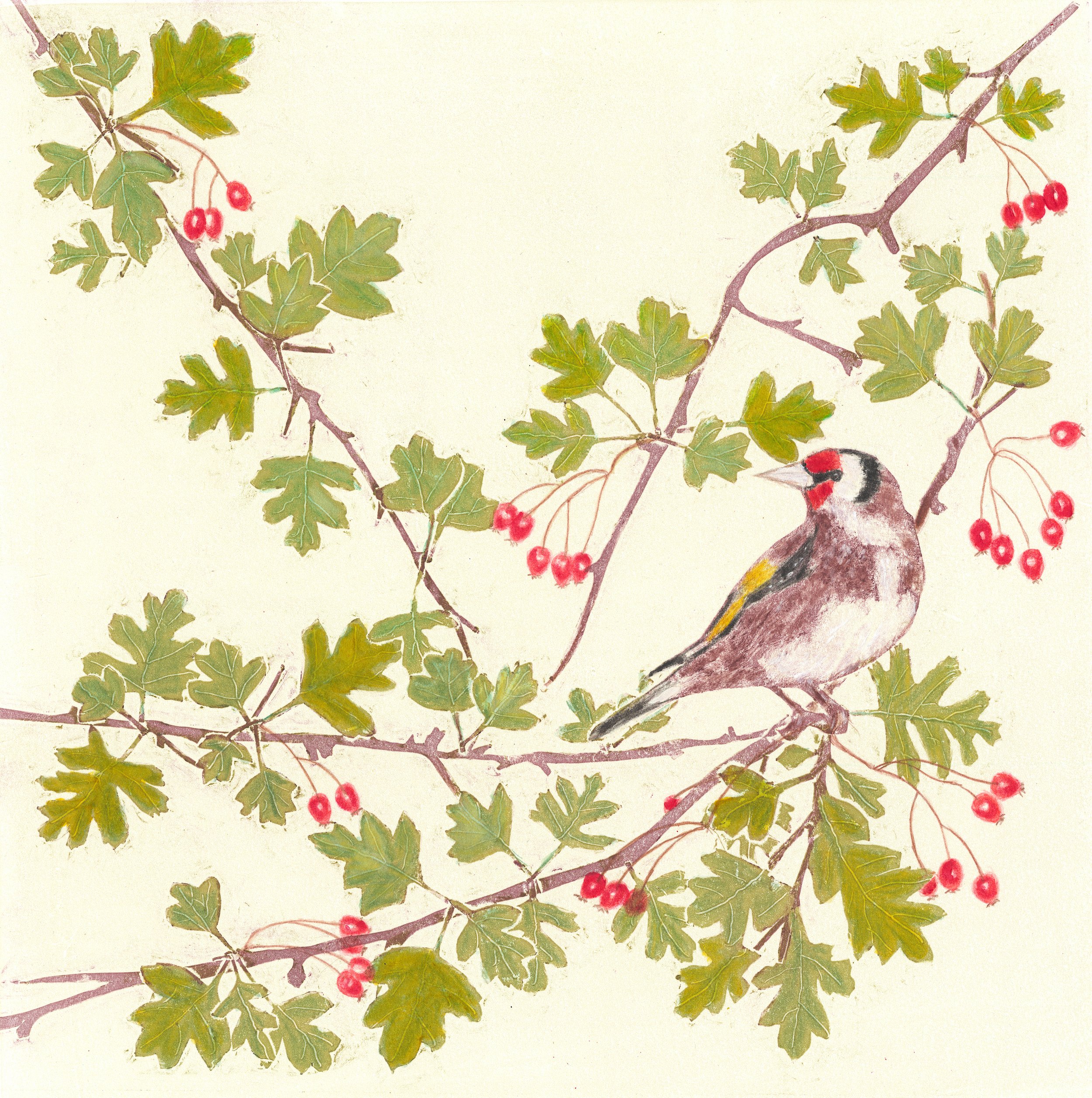
Medium: Mixed Media
Size: 25 cm x 25 cm
This artwork is sold unmounted and unframed
These lively birds are a delight to watch as they flit in and out of the hawthorn hedgerows, often swooping down to feed and bringing vivid splashes of red and gold to the garden. They first found us when we added Nyjer seeds to the feeders. Nyjer seeds, rich in oil and high in energy, are a favourite food for goldfinches, as well as greenfinches and siskins.
Although goldfinches have become frequent visitors, Nyjer seeds have been substituted with sunflower seeds. This is because the Nyjer seeds tended to germinate and grow into a dense mass beneath the feeder, which proved difficult to remove.
Goldfinches possess fine beaks that allow them to extract seeds from thistles and dandelions. Growing these wildflowers in the garden is beneficial, as it not only attracts goldfinches but also supports a variety of other birds and wildlife.
The goldfinch population is thriving, with numbers estimated to have more than doubled since the 1970s. Approximately 1.2 million pairs are believed to breed across the UK annually. Despite this positive trend, goldfinches continue to face challenges such as habitat loss and the clearance of woods and trees, which threaten their long-term survival.
Price: £80
Medium: Mixed Media
Size: 25 cm x 25 cm
This artwork is sold unmounted and unframed
These lively birds are a delight to watch as they flit in and out of the hawthorn hedgerows, often swooping down to feed and bringing vivid splashes of red and gold to the garden. They first found us when we added Nyjer seeds to the feeders. Nyjer seeds, rich in oil and high in energy, are a favourite food for goldfinches, as well as greenfinches and siskins.
Although goldfinches have become frequent visitors, Nyjer seeds have been substituted with sunflower seeds. This is because the Nyjer seeds tended to germinate and grow into a dense mass beneath the feeder, which proved difficult to remove.
Goldfinches possess fine beaks that allow them to extract seeds from thistles and dandelions. Growing these wildflowers in the garden is beneficial, as it not only attracts goldfinches but also supports a variety of other birds and wildlife.
The goldfinch population is thriving, with numbers estimated to have more than doubled since the 1970s. Approximately 1.2 million pairs are believed to breed across the UK annually. Despite this positive trend, goldfinches continue to face challenges such as habitat loss and the clearance of woods and trees, which threaten their long-term survival.